For me, tzatziki (officially pronounced T-zat-zi-ki-ki IYKYK ;)) is one of the cornerstones of any good mezze spread, grazing table or girl dinner. What makes it even better, is how quick and easy to throw together.
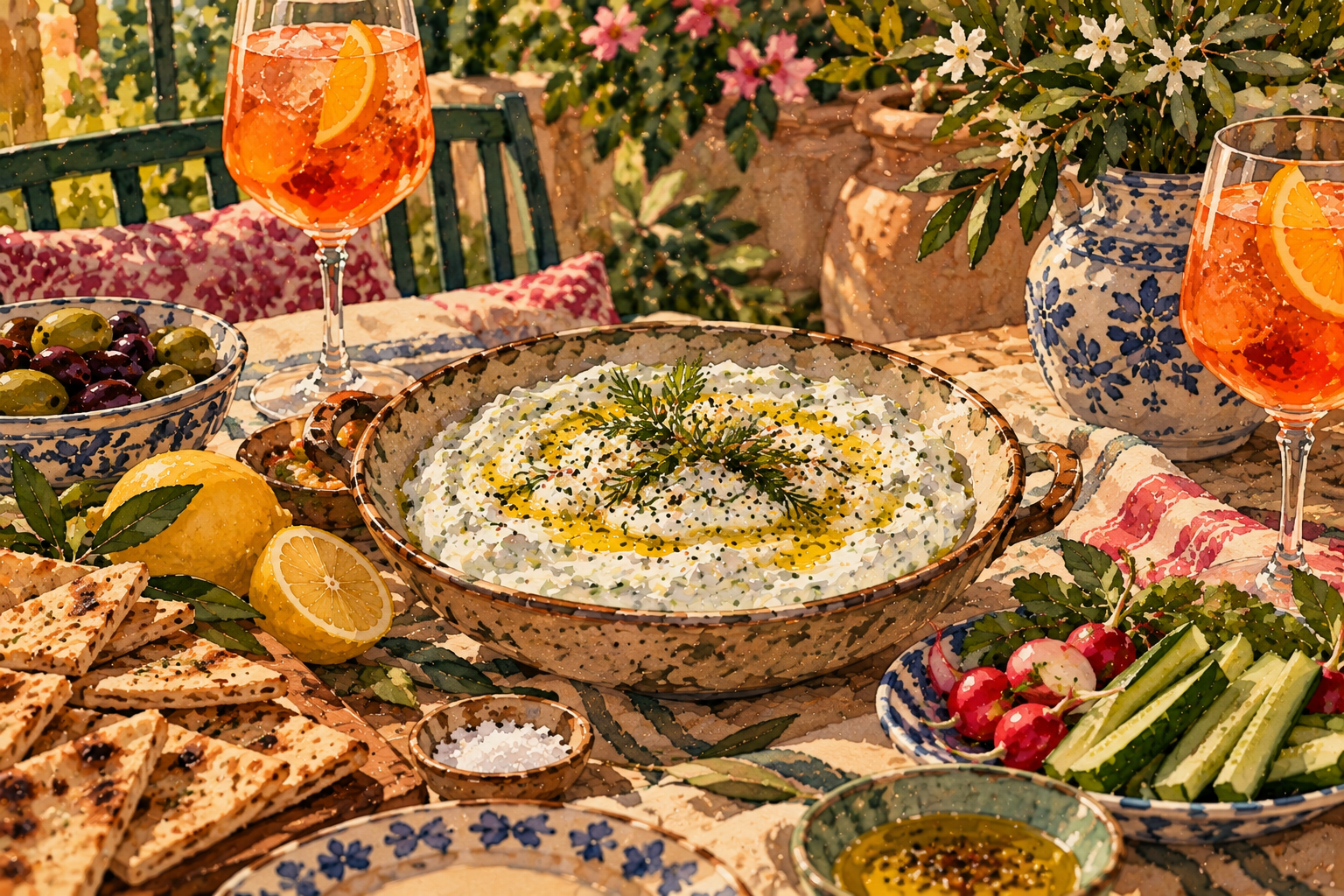
I’ve been making tzatziki for as long as I can remember. It started as my contribution to my mum’s summer BBQs, and now it makes an appearance at pretty much every dinner party I host. I’m a firm believer that a selection of good dips, some warm bread and a few picky bits makes the perfect GIRL DINNER.
Perhaps that comes from growing up eating at Greek and Turkish restaurants, where we’d always be greeted with complimentary bowls of hummus, tzatziki and salad before we’d even ordered. Frankly, that was always my favourite part.
Greek Tzatziki
Thick, creamy and wonderfully garlicky, this homemade tzatziki is packed with crunchy cucumber, fresh dill and a generous squeeze of lemon. It's one of my favourite things to put on the table when I'm hosting, whether alongside warm pittas, grilled meats or simply a big bowl of bread for dipping. The secret is squeezing every last drop of moisture from the cucumber and using a properly thick Greek yoghurt.
Equipment: Box grater, mixing bowls, clean tea towel, sharp knife, chopping board, citrus juicer, spoon and serving bowl.
Ingredients
Tick off each ingredient as you go. Your ticks will reset when the page reloads.
Method
- Prepare your cucumbers. Coarsely grate the cucumbers directly into a bowl and sprinkle with a generous pinch of sea salt. Give everything a quick toss and leave to sit for 5–10 minutes. The salt will draw out the excess moisture, which is exactly what we want. Nobody likes watery tzatziki.
- Squeeze out the moisture. Transfer the grated cucumber to the centre of a clean tea towel, gather the edges and wring out as much liquid as you possibly can. Don't be shy here! The drier your cucumber, the thicker and creamier your tzatziki will be. Transfer to a clean mixing bowl.
- Make your garlic paste. Finely grate the garlic cloves onto a chopping board, sprinkle with a little coarse sea salt and use the flat side of your knife to smush everything together until it forms a smooth paste. This helps distribute the garlic evenly throughout the yoghurt, rather than leaving you with the occasional aggressive chunk of raw garlic. Add to the cucumber.
- Bring everything together. Add the Greek yoghurt and start with the juice of half a lemon. Stir until everything is beautifully combined, then season with freshly ground black pepper and a little more salt if needed. Taste and gradually add more lemon juice until you've got the balance of freshness and acidity just right.
- Add your herbs. Finely chop the fresh dill and fold it through the mixture. I like to use around ⅓ cup because I absolutely love dill, but this is entirely up to you. If dill isn't your thing, you can leave it out or try a little dried oregano instead. I've also used the Waitrose Mediterranean herb mix before, which is divine.
- Finish and serve. And voilà! Spoon your tzatziki into a serving bowl and, if you're feeling fancy, finish with a generous glug of good olive oil and a dusting of sumac. Refrigerate until you're ready to serve, ideally giving it at least 20–30 minutes for the flavours to mingle. Best enjoyed with warm bread, although I have been known to eat it straight from the bowl.
A little note from my kitchen
The secret to really good tzatziki is getting rid of as much cucumber moisture as possible and using a properly thick Greek yoghurt. I swear by Fage 5% because it's wonderfully rich and creamy without becoming too heavy.
This is also one of those starters you can prepare well ahead of a dinner party — either the morning of, or the evening before if you're in a pinch. Just keep it in an airtight container in the fridge. If any excess water rises to the top, simply pour it off before serving.
And don't skip the garlic paste trick — nobody wants to bite into a piece of raw garlic in a dip. It takes about 30 seconds and makes a world of difference.
Lastly, remember to season in layers to build depth of flavour. Salt, especially, is used to draw certain flavours and textures from ingredients, so use it as a tool when cooking — not just something thrown in at the end for the sake of it.